
Quick Read
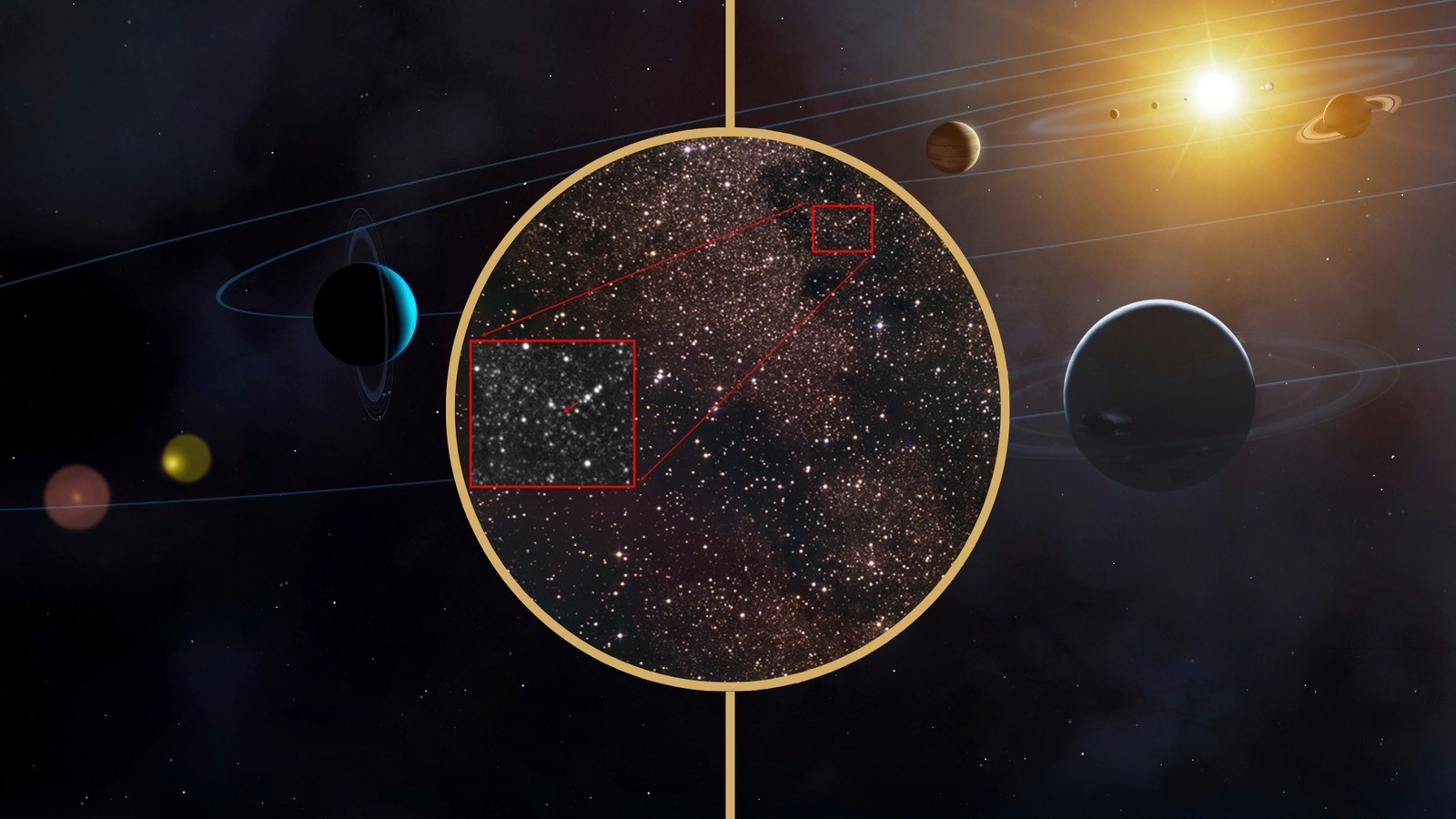
- Interstellar comet 3I/ATLAS is visible in the winter 2025 night sky after passing behind the Sun.
- The comet was photographed over Egypt’s Black Desert, showing a faint green glow from cyanide gas emissions.
- 3I/ATLAS originated outside our Solar System and will only pass through once before returning to interstellar space.
- It has been observed by major space telescopes and missions, but Earth-based images bring its beauty closer to the public.
- Photographer Osama Fathi captured the comet using long-exposure techniques in a remote, dark-sky location.
Interstellar Comet 3I/ATLAS Captivates the World After Solar Passage
In the crisp nights of winter 2025, a visitor from beyond our Solar System has caught the attention of both seasoned astronomers and casual stargazers: the interstellar comet 3I/ATLAS. Following its concealed journey behind the Sun in autumn, the comet has reemerged, now visible to anyone with a telescope and the curiosity to seek it out. The fact that 3I/ATLAS is not just another icy wanderer from our own cosmic neighborhood, but a true interstellar traveler, makes this apparition one of the most memorable astronomical events of the year.
What Makes 3I/ATLAS Unique?
Unlike most comets that orbit our Sun on repeat journeys, 3I/ATLAS was born in a distant star system. Its trajectory through the Solar System is a fleeting, one-time passage before it resumes its interstellar journey, destined to never return. Scientists have confirmed its origin by tracking its path and observing its chemical composition, notably the cyanide radical gas emission in its coma—a detail that gives the comet its subtle cyan glow. This emission, according to Sky at Night Magazine, is a chemical fingerprint shared with other comets, but in this case, it’s a marker from a planetary system far out of our reach.
Since its discovery, 3I/ATLAS has been observed by some of humanity’s most advanced instruments: the Hubble Space Telescope, the James Webb Space Telescope, NASA’s solar missions, Mars orbiters, and even a European probe en route to Jupiter. Yet, it’s the terrestrial captures—those taken from Earth’s surface—that have brought its beauty closer to home.
The Black Desert Encounter: Capturing a Cosmic Visitor
One particularly striking image of 3I/ATLAS was recently made by photographer Osama Fathi. From Egypt’s Black Desert—a landscape where volcanic hills rise quietly and acacia trees stand solitary against the night—Fathi managed to immortalize the interstellar comet as it slipped through the sky. He recounts the scene: “From the heart of Egypt’s Black Desert, where volcanic hills rise like silent sentinels and acacia trees stand alone against the night, an object from another star system drifts through our sky: interstellar comet 3I/ATLAS.”
Fathi’s approach was meticulous. Using an astro-modified Nikon Z6 paired with a RedCat telescope lens set at 3× optical zoom (approximately 750mm focal length), he isolated the comet against the desert horizon. To bring out the comet’s delicate structure and faint gas halo, he stacked 60 exposures of 60 seconds and another 60 exposures of 30 seconds at ISO 1500. These long exposures were critical: they allowed the subtle details of the comet’s coma and its motion against the backdrop of stars to emerge, even under the pure, dark Saharan sky. The shoot began at 3 a.m., in complete silence—no city lights, just the silhouettes of trees and the vastness above. In that stillness, 3I/ATLAS appeared, a faint but unmistakable visitor from the depths of interstellar space.
How to See and Photograph 3I/ATLAS Yourself
With its current visibility in the winter night sky, amateur astronomers worldwide have a rare chance to spot 3I/ATLAS. Smart telescopes, which can quickly locate and track celestial objects, have made it easier than ever to hone in on the comet and capture stunning images. The comet’s faint green glow, shaped by cyanide emissions in its coma, is best revealed in dark-sky locations far from city lights—places where Earth’s own silence meets the silence of the cosmos.
Fathi’s experience offers some guidance for those hoping to try their hand at astrophotography: choose a remote site, use equipment capable of long exposures, and plan for the early morning hours when the sky is darkest. His advice, as shared with Sky at Night Magazine, is both technical and poetic: “No city lights, just the dark silhouettes of the trees and the pure sky above. In that still, beautiful scene, 3I/ATLAS appeared in the field of view: a faint visitor from another star system, crossing our sky once in a lifetime while the desert slept.”
The Scientific and Emotional Impact of an Interstellar Visitor
For astronomers, the passage of 3I/ATLAS is a chance to study material from beyond our Solar System—an invaluable scientific opportunity. Every observation, whether by space probe or backyard telescope, adds to our understanding of the building blocks of distant planetary systems. For the public, 3I/ATLAS is a reminder of the vastness and mystery of the universe, a spectacle that connects us to the stars in a profoundly personal way.
As the comet continues its journey, it invites us to reflect: What other stories are carried by objects like 3I/ATLAS, drifting silently between the stars? How many more cosmic visitors pass unnoticed, their origins forever unknown? In this moment, the answer is visible—a green glow slipping between the trees, a messenger from another world.
As 3I/ATLAS graces our night skies in 2025, it stands as both a scientific marvel and a poetic symbol of cosmic connection. Its brief presence is a powerful reminder that, in the vastness of space, our small world is part of a much larger story—one that stretches far beyond the boundaries of our Solar System. Sky at Night Magazine provides the clearest window into this rare event, ensuring that the wonder of 3I/ATLAS is shared with the world, both through expert observation and the personal artistry of those who seek its light.